
Static ADAS Calibration
What is ADAS Static Calibration?
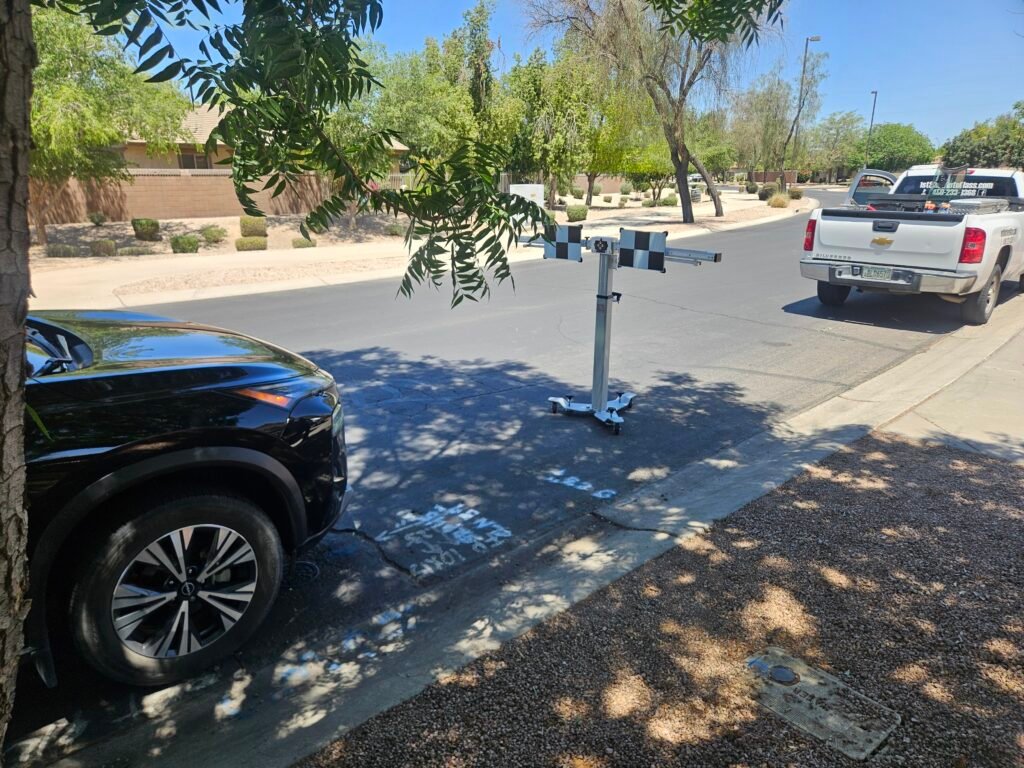
An ADAS windshield static camera calibration is a critical process in modern vehicles equipped with advanced driver assistance systems (ADAS). It involves precisely aligning and calibrating the cameras mounted on the windshield or rearview mirror to ensure their accuracy in detecting and interpreting road conditions, lane markings, and objects. The image above shows a 2023 Nissan Rogue beginning static camera calibration right after a new windshield replacement in Gilbert.
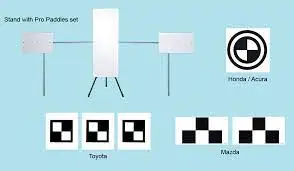
This calibration process typically takes place in a controlled environment, often at a specialized auto repair or service center, and uses precise tools and targets. During calibration, the vehicle’s cameras capture specific reference points or targets placed at known positions in front of the vehicle. The calibration software then adjusts the camera’s settings to ensure their field of view matches the vehicle manufacturer’s specifications. Proper windshield static camera calibration is crucial after a windshield replacement for the reliable operation of ADAS features like adaptive cruise control, lane departure warning, and collision avoidance systems. Failure to calibrate these cameras correctly can result in inaccurate readings and potential safety risks on the road.
When Is Static Camera Calibration Required?
This is missing and would be valuable. Explain that requirements depend on the vehicle manufacturer and can include windshield replacement, camera removal/reinstallation, certain collision repairs, wheel alignment/suspension changes on some applications, or diagnostic/calibration faults.
H2: How Static ADAS Calibration Works
Static ADAS calibration is performed while the vehicle remains stationary. Unlike a dynamic calibration that requires the vehicle to be driven under specific road conditions, static calibration uses precisely positioned targets or patterns placed in front of the vehicle.
Before calibration begins, the technician follows vehicle-specific procedures to prepare the vehicle and calibration area. Depending on the manufacturer, this may include checking tire pressure, vehicle ride height, steering position, fuel level or vehicle load, and confirming that the vehicle is positioned on an appropriate level surface.
Specialized calibration equipment is then used to measure and position the required target at an exact distance and location in relation to the vehicle. These measurements are important because the forward-facing ADAS camera uses the target as a known reference point.
Once the vehicle and targets are correctly positioned, a diagnostic scan tool communicates with the vehicle’s ADAS system and initiates the calibration procedure. The camera identifies the target and establishes the correct orientation and field of view specified by the vehicle manufacturer.
When the calibration is successfully completed, the system confirms that the camera has learned the required reference position. A post-calibration scan or verification procedure may also be performed to confirm that the calibration completed successfully and check for related diagnostic trouble codes.
Why Accurate Target Placement Matters
Static ADAS calibration requires the calibration target to be positioned according to the vehicle manufacturer’s specifications. Target height, distance, alignment, and the vehicle’s position all play a role in establishing the correct reference point for the forward-facing camera.
These measurements should not be estimated by eye. Incorrect target placement can prevent the calibration from completing successfully or result in the camera learning an inaccurate reference position.
Precise target placement helps ensure the camera has the correct field of view so the driver-assistance systems that rely on it can operate as intended.
Call Now or Text for Fast Mobile Service
