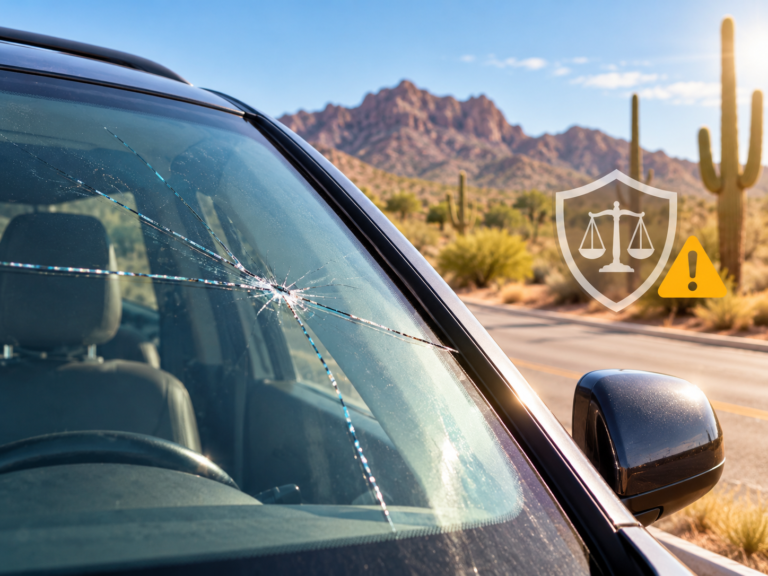
You’re driving down an Arizona highway when a truck ahead hits a bump, sending gravel, construction materials, or other unsecured debris toward your vehicle. Moments later, you’re staring at a chipped or cracked windshield.
Naturally, your first question might be: Is the truck driver or trucking company responsible for the damage?
You’ve probably seen warning signs on trucks stating, “Stay Back 200 Feet — Not Responsible for Broken Windshields.” But do those signs actually protect trucking companies from liability?
The answer depends on several factors, including where the debris originated, whether the load was properly secured, and what evidence is available.
In this guide, we’ll explain Arizona’s unsecured-load laws, the difference between falling cargo and rocks kicked up from the roadway, and what you should do if a truck damages your windshield.
Do "Stay Back 200 Feet" Signs Protect Trucking Companies From Liability?
We’ve all seen dump trucks displaying signs that say “Stay Back 200 Feet — Not Responsible for Broken Windshields.” But does displaying that warning automatically release the driver or trucking company from responsibility?

No. A warning sign alone does not eliminate a truck operator’s legal obligations.
In Arizona, drivers are required to secure transported materials to prevent loads from escaping onto the roadway. If gravel, construction debris, or other materials fall from an improperly secured truck and damage another vehicle, the driver or company may be held responsible depending on the circumstances.
However, a warning sign also doesn’t mean the trucking company is automatically liable for every broken windshield. The source of the debris, evidence of negligence, and circumstances surrounding the impact all matter.
Maintaining a safe following distance is still important, regardless of what a truck’s warning sign says.
What Does Arizona Law Say About Unsecured Truck Loads?
Arizona Revised Statutes § 28-1098 requires vehicles traveling on public roads to be loaded and secured so that transported materials do not fall, spill, or otherwise escape onto the roadway, subject to limited exceptions.
The law also requires loads and their coverings to be properly secured so they don’t become hazards to other drivers.
But there’s an important distinction between falling cargo and ordinary road debris.
If gravel, rocks, construction materials, or other objects fall directly from a truck’s unsecured load and damage your windshield, the driver or trucking company may be responsible, depending on the evidence and circumstances.
However, when a truck’s tires kick up a rock that was already lying on the roadway, establishing responsibility is usually more difficult. That situation does not necessarily involve an unsecured load or a violation of Arizona’s load-securement law. The Arizona Department of Transportation also emphasizes the importance of securing cargo to prevent roadway hazards in its Secure Your Load safety guidance.
The critical question is where the damaging object came from—not simply whether a truck was driving ahead of you.
What Should You Do if Debris From a Truck Damages Your Windshield?
If gravel, construction materials, or other debris from a truck strikes your windshield, gathering the right information can make a significant difference when reporting the incident or filing an insurance claim.
1. Pull Over Safely and Inspect the Damage
If your windshield is cracked or your visibility is affected, find a safe location to stop. Avoid sudden braking or attempting to chase the truck. Your safety comes first.
2. Record the Truck’s Information
If you can do so safely, document the truck’s license plate, company name, identifying numbers, and any visible unsecured materials. Dashcam footage can be particularly helpful if it shows debris falling directly from the truck.
3. Photograph the Windshield Damage
Take clear pictures of the impact point, surrounding cracks, and overall windshield condition. Record the time, location, and circumstances of the incident while they’re still fresh in your memory.
4. Report the Incident When Appropriate
If the truck is actively losing cargo or creating a roadway hazard, report the situation to the appropriate authorities. You may also contact the trucking company to document the damage and ask about its claims procedure.
5. Contact Your Insurance Company
Comprehensive auto insurance may cover windshield damage caused by flying debris, depending on your policy. Arizona drivers with optional full-glass coverage may qualify for repair or replacement without a glass deductible.
6. Have the Windshield Professionally Evaluated
Even a small rock chip can spread, especially during Arizona’s extreme temperature changes. A qualified auto glass technician can determine whether the damage is repairable or requires complete windshield replacement.
Remember, documenting the incident doesn’t guarantee that the trucking company will accept responsibility, but good evidence can help support your claim.
Who Pays When a Truck Damages Your Windshield?
If a truck damages your windshield, determining who pays for the repair or replacement depends on where the debris originated, whether another party was negligent, and what insurance coverage is available.
When the Trucking Company May Be Responsible
In most cases, a truck driver is not automatically responsible when the vehicle’s tires kick up a small rock already lying on the roadway. Ordinary road debris is generally treated as a driving hazard unless negligence can be established.
However, when gravel, rocks, or construction materials fall directly from an improperly secured load, the driver or trucking company may be responsible for resulting damage. Arizona law requires transported materials to be properly secured, but determining financial liability depends on the circumstances and available evidence.
A warning sign stating “Not Responsible for Broken Windshields” does not automatically protect a trucking company from liability for negligent conduct.
Using Your Own Comprehensive Insurance
Even when a trucking company denies responsibility, your comprehensive auto insurance may cover damage caused by flying rocks or road debris, subject to your policy terms.
In Arizona, insurers offering comprehensive coverage for private passenger vehicles must also offer optional full-glass coverage under A.R.S. § 20-264.
If you’ve selected this coverage, qualifying windshield repair or replacement can generally be completed without a glass deductible. Without full glass coverage, your regular comprehensive deductible may apply.
What If the Trucking Company Refuses to Pay?
You can ask the trucking company or its insurer to review your evidence and explain its decision. If responsibility remains disputed, your own comprehensive coverage may provide a way to repair or replace the windshield without waiting for the liability dispute to be resolved.
At 1st Shot Auto Glass, we help Arizona drivers verify their glass coverage, understand their deductibles, and navigate the windshield insurance claims process.
Protecting Your Windshield From Truck Debris in Arizona
Rocks, gravel, and unsecured cargo can cause serious windshield damage on Arizona highways. However, determining responsibility isn’t always straightforward.
A truck driver generally isn’t automatically liable when tires kick up ordinary roadway debris. Materials falling from an improperly secured load are a different matter, and responsibility may depend on the circumstances and available evidence.
If your windshield is damaged, prioritize your safety, document what happened, and have the glass professionally evaluated. Small chips may qualify for windshield repair, while larger cracks or extensive damage may require complete replacement.
At 1st Shot Auto Glass, we provide mobile windshield repair and replacement throughout Mesa and the Phoenix metro area. We also help customers verify their insurance coverage and understand their options when windshield damage occurs.
Whether another driver is responsible or not, addressing windshield damage promptly is important for your safety.