
Modern windshields do much more than provide a clear view of the road. Some vehicles feature heated windshield technology designed to remove frost, ice, and condensation, improving visibility in cold or damp conditions.
Depending on the vehicle, heating systems may use fine electrical wires embedded in the glass, transparent conductive layers, or heating elements concentrated near the windshield wipers. These systems work alongside the vehicle’s climate control and defrosting features.
Replacing a heated windshield requires more than matching its size and shape. The replacement glass must support the vehicle’s original heating features, and electrical connections must be properly transferred or reconnected.
At 1st Shot Auto Glass, we understand the importance of identifying these specialized windshield features before replacement to help preserve their intended functionality.
Different Types of Heated Windshield Systems
Not all heated windshields operate the same way. Depending on the vehicle, heating elements may cover the entire windshield or be concentrated in specific areas where ice and frost commonly accumulate.
1. Heated Wiper Park Areas
Some windshields contain electrical heating elements near the bottom edge, where the windshield wipers rest. These elements help prevent the wiper blades from freezing to the glass and make it easier to remove accumulated ice and snow.
2. Fully Heated Windshields
Certain vehicles use extremely fine electrical wires embedded within the laminated windshield. When activated, these wires generate heat across a larger portion of the glass, helping remove frost, ice, and condensation without relying entirely on warm air from the dashboard vents.
3. Transparent Conductive Heating Layers
Some advanced windshield designs use electrically conductive coatings or films rather than visible heating wires. These specialized layers distribute heat across the glass while maintaining a clear view of the road.
Regardless of the technology, replacement glass must match the vehicle’s original heating configuration. Installing a windshield without the proper heating elements or electrical connections can leave factory-equipped features inoperative.

What Happens to Heated Windshield Features During Replacement?
Replacing a heated windshield requires careful attention to the vehicle’s original equipment. Although heating elements may be difficult to see, their electrical connections and mounting locations are important parts of the windshield assembly.
Identifying the Correct Replacement Glass
Before installation, the replacement windshield must be matched to the vehicle’s factory heating features. Depending on the model, this may include a heated wiper park area, a fully heated windshield, or a dedicated heating zone near the forward-facing camera.
Electrical Connections and Installation
Heated windshields typically have electrical connectors that link the glass-mounted heating elements to the vehicle’s electrical system. During replacement, these connections must be carefully disconnected and reconnected without damaging the wiring or terminals.
Heating elements incorporated into the original glass generally cannot be transferred to a windshield that lacks the same technology.
Checking Operation After Replacement
After installation, electrical connections should be inspected and the heating system tested according to the vehicle manufacturer’s procedures.
If the windshield also supports an ADAS camera, that camera may require separate calibration following replacement. Windshield heating and ADAS calibration are different systems, even when their components are located close together.
Benefits of Heated Windshield Technology
Heated windshield technology offers several advantages beyond traditional dashboard defrosters. Although especially useful in colder climates, certain heating features can also benefit Arizona drivers during winter mornings or trips to higher elevations.
Faster Frost and Ice Removal
Fully heated windshields can help clear frost and ice across the glass more quickly than conventional airflow alone. Heated wiper park areas target the lower windshield, helping prevent wiper blades from freezing to the glass.
Improved Visibility
By helping remove frost, ice, and moisture from designated areas, windshield heating systems can improve visibility in challenging weather conditions. Their effectiveness depends on the type of heating technology installed.
Protection for Windshield Wipers
Heating elements near the wiper resting position can reduce ice buildup around the blades, helping them operate more effectively during freezing conditions.
Support for Windshield-Mounted Cameras
Some vehicles feature dedicated heating elements near forward-facing ADAS cameras. These systems may help prevent frost or condensation from obstructing the camera’s viewing area, supporting proper operation under certain weather conditions.
Convenience During Arizona Winters
While Mesa rarely experiences the freezing conditions found in colder regions, drivers traveling to Flagstaff, northern Arizona, or mountainous areas may appreciate these factory-equipped features.
Preserving the correct heating technology during windshield replacement helps maintain the comfort, convenience, and visibility features originally designed into the vehicle.
How Are Heated Windshields Different From Rear Window Defrosters?
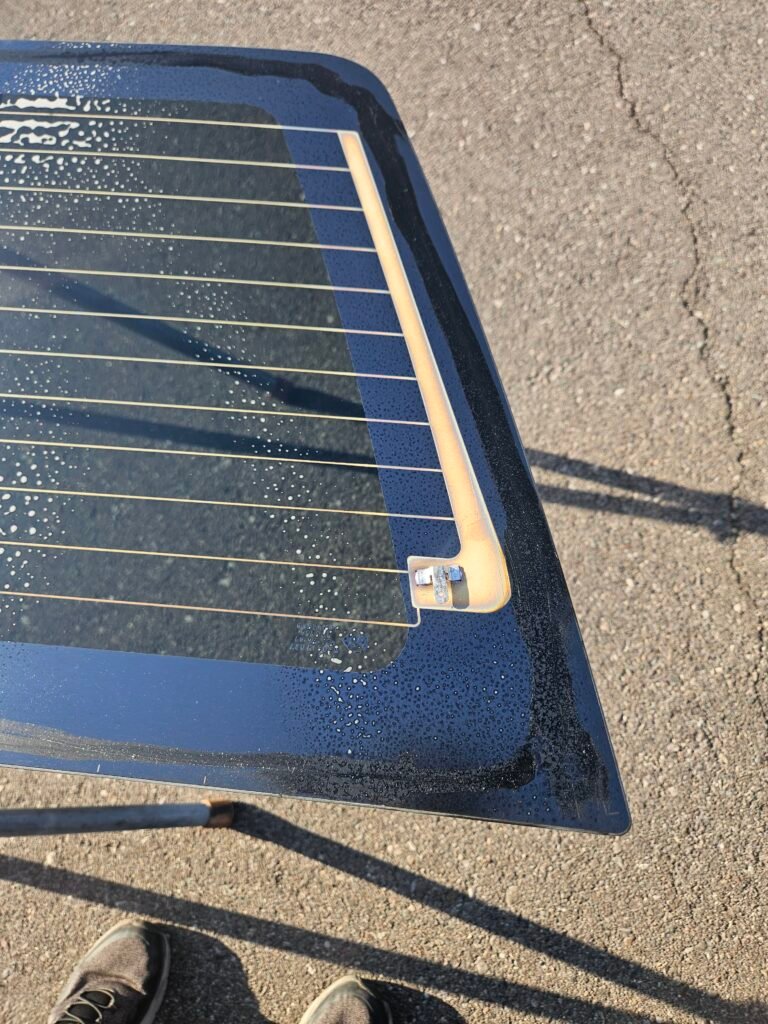
Although both systems use electricity to heat automotive glass, heated windshields and rear window defrosters often use different technologies.
Most heated rear windows feature visible conductive grid lines applied to the glass. When electricity passes through these lines, they generate heat to help clear fog, frost, and ice.
Heated windshields may instead use fine embedded wires, transparent conductive coatings, or localized heating elements near the wipers or ADAS cameras.
Both systems require proper electrical connections during glass replacement. Damaged terminals or incompatible replacement glass can prevent the heating features from operating correctly.
Learn more about our Rear Windshield Replacement services.
Frequently Asked Questions About Heated Windshields
How can I tell if my vehicle has a heated windshield?
Some heated windshields have fine wires visible within the glass, while others have heating elements near the windshield wipers or forward-facing camera. Many heating features are difficult to identify visually. Your vehicle’s equipment information or VIN can help determine which windshield features were installed.
Can a regular windshield replace a heated windshield?
A standard windshield may physically fit certain vehicles, but it will not preserve factory heating functions if it lacks the required heating elements and electrical connections. Matching the original windshield specifications is important for maintaining these features.
Do heated windshields require special maintenance?
Heated windshields generally require no special maintenance beyond normal glass care. However, damaged electrical connectors, wiring, or heating elements can prevent the system from operating properly.
Does replacing a heated windshield require ADAS calibration?
Not necessarily because of the heating feature itself. However, if the windshield also supports a forward-facing ADAS camera, calibration may be required according to the vehicle manufacturer’s procedures.
Learn more about our ADAS Calibration Services.
Are heated windshields useful in Arizona?
Yes. Although freezing weather is uncommon in Mesa, heated windshield features can be beneficial during colder mornings or when traveling to higher elevations, including northern Arizona. Certain localized heating systems can also help keep windshield-mounted camera areas clear under appropriate conditions.
Get Up To $450 Cash Back With a Qualifying Insurance-Approved Windshield Replacement
Eligibility and available cash-back amounts vary by vehicle, insurance coverage, windshield features, and claim approval.
Call (480) 233-9368 or Text
Free Mobile Service • Family Owned & Operated