
What Is Static ADAS Camera Calibration?
Static ADAS camera calibration is a specialized procedure that aligns and verifies a vehicle’s forward-facing camera system while the vehicle remains stationary. Unlike dynamic calibration, which requires driving, static calibration uses precisely positioned targets and specialized diagnostic equipment to establish accurate camera reference points.
Following a windshield replacement, even slight changes in camera positioning can affect how advanced driver assistance systems (ADAS) interpret lane markings, vehicles, and other objects on the road.
When required by the vehicle manufacturer, static calibration helps restore intended camera performance and supports the proper operation of safety features such as lane departure warning, lane keeping assist, and automatic emergency braking.
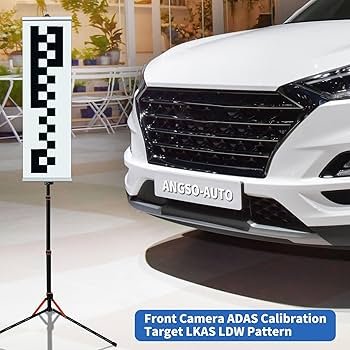
Static ADAS calibration requires specialized equipment, manufacturer-specified targets, and careful vehicle positioning. Depending on the vehicle, calibration targets may feature checkerboard patterns, geometric shapes, or other reference designs recognized by the forward-facing camera.
During calibration, diagnostic equipment guides the procedure while the camera identifies these reference points. Target positioning, vehicle measurements, and environmental conditions must meet the manufacturer’s specifications for accurate results.
Because calibration requirements vary by make, model, and camera system, technicians must follow the appropriate vehicle-specific procedures rather than using a universal setup.

Why Accurate Target Placement Matters
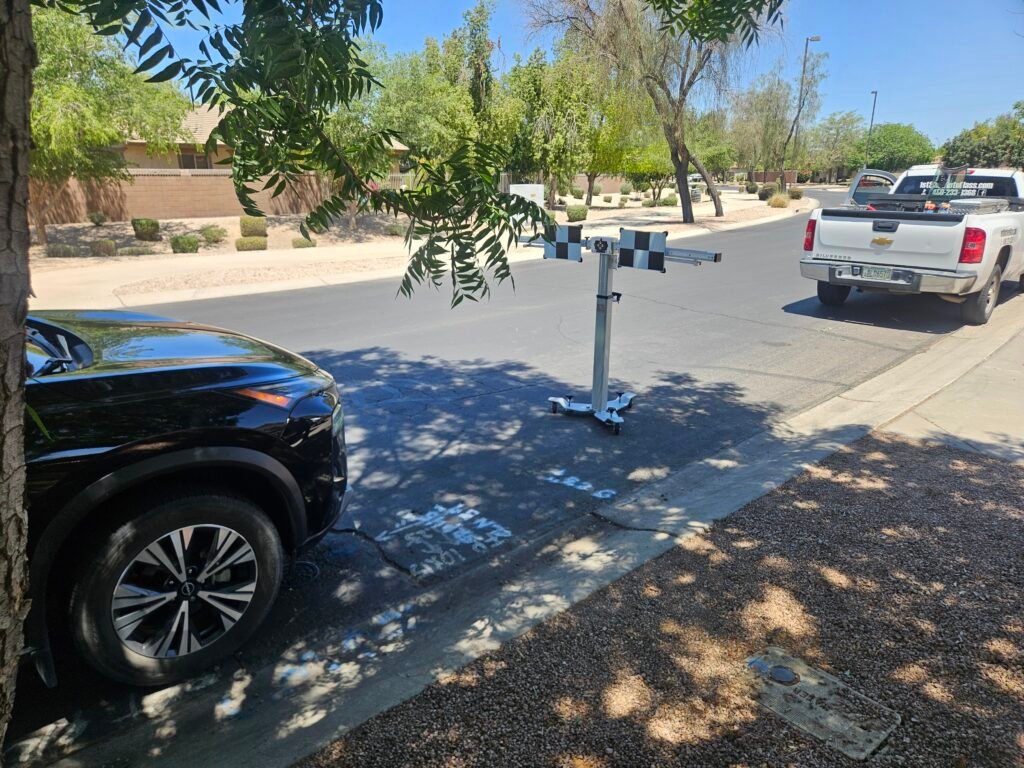
Static ADAS calibration requires the calibration target to be positioned according to the vehicle manufacturer’s specifications. Target height, distance, alignment, and the vehicle’s position all play a role in establishing the correct reference point for the forward-facing camera.
These measurements should not be estimated by eye. Incorrect target placement can prevent the calibration from completing successfully or result in the camera learning an inaccurate reference position.
Precise target placement helps ensure the camera has the correct field of view so the driver-assistance systems that rely on it can operate as intended.
When Is Static ADAS Camera Calibration Required?
Static ADAS camera calibration may be required when repairs or adjustments affect the position or alignment of a vehicle’s forward-facing camera. Common situations include:
-
Windshield replacement: Installing new glass can affect the camera’s mounting position or optical alignment.
-
Camera removal or replacement: Removing, reinstalling, or replacing a windshield-mounted camera may require recalibration.
-
Collision repairs: Repairs involving the camera mounting area or vehicle structure may require calibration.
-
Wheel alignment or suspension work: Certain manufacturers require camera recalibration following changes to vehicle ride height or alignment.
-
Diagnostic trouble codes: Camera-related faults or manufacturer service procedures may indicate that calibration is necessary.
Not every vehicle requires static calibration. Depending on the manufacturer’s specifications, a vehicle may require static calibration, dynamic calibration, or both.
At 1st Shot Auto Glass, we identify applicable calibration requirements and coordinate the necessary procedures with qualifying windshield replacements throughout Mesa, Phoenix, and
How Static ADAS Calibration Works
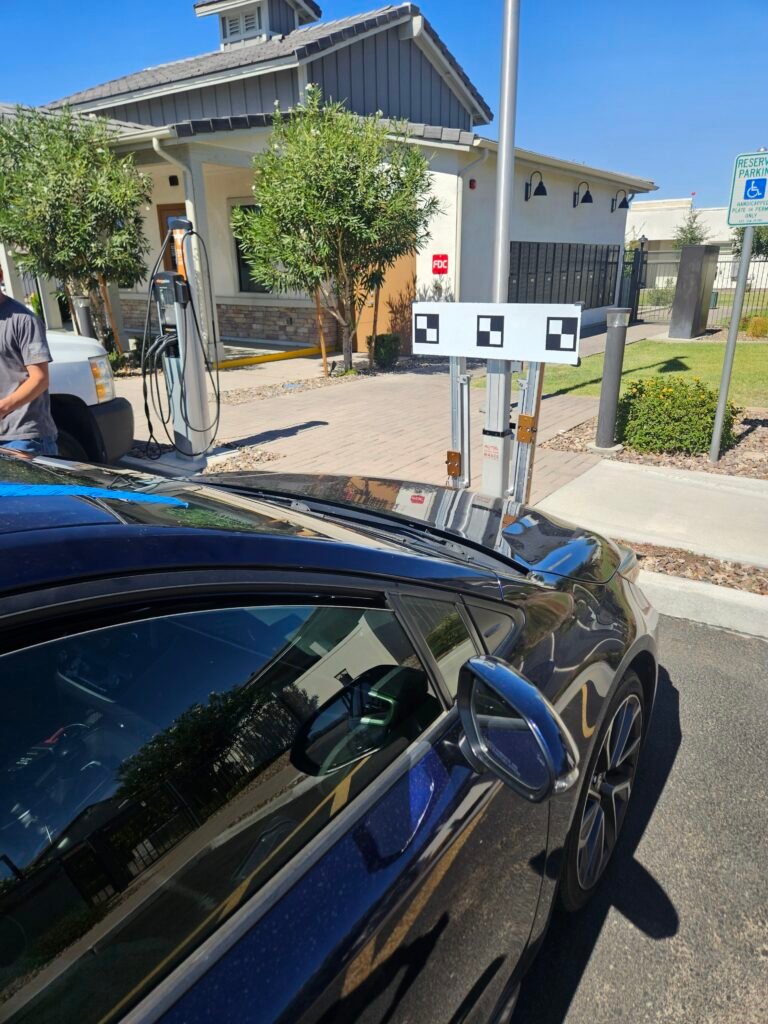
Static ADAS calibration is performed while the vehicle remains stationary. Unlike a dynamic calibration that requires the vehicle to be driven under specific road conditions, static calibration uses precisely positioned targets or patterns placed in front of the vehicle.
Before calibration begins, the technician follows vehicle-specific procedures to prepare the vehicle and calibration area. Depending on the manufacturer, this may include checking tire pressure, vehicle ride height, steering position, fuel level or vehicle load, and confirming that the vehicle is positioned on an appropriate level surface.
Specialized calibration equipment is then used to measure and position the required target at an exact distance and location in relation to the vehicle. These measurements are important because the forward-facing ADAS camera uses the target as a known reference point.
Once the vehicle and targets are correctly positioned, a diagnostic scan tool communicates with the vehicle’s ADAS system and initiates the calibration procedure. The camera identifies the target and establishes the correct orientation and field of view specified by the vehicle manufacturer.
When the calibration is successfully completed, the system confirms that the camera has learned the required reference position. A post-calibration scan or verification procedure may also be performed to confirm that the calibration completed successfully and check for related diagnostic trouble codes.
Static vs. Dynamic ADAS Calibration
Although both methods help restore proper camera alignment, static and dynamic ADAS calibration use different procedures.
Static ADAS Calibration: Performed while the vehicle remains stationary, using precisely positioned calibration targets and specialized equipment to establish camera reference points.
Dynamic ADAS Calibration: Performed while driving under manufacturer-specified conditions. The camera uses lane markings and other road features to complete its calibration procedure.
Dual ADAS Calibration: Some vehicles require both static and dynamic procedures to complete calibration successfully.
The correct method depends on the vehicle manufacturer’s specifications, camera system, and required service procedures.
Static ADAS Camera Calibration FAQs
How long does static ADAS camera calibration take?
Static ADAS camera calibration typically takes approximately 30–90 minutes, although the time varies depending on the vehicle manufacturer, camera system, and required procedures.
Technicians must precisely position calibration targets, verify vehicle measurements, perform diagnostic procedures, and confirm successful calibration. Vehicles requiring both static and dynamic calibration may take additional time.
Does static ADAS calibration require special equipment?
Yes. Static ADAS calibration requires specialized diagnostic equipment, vehicle-specific calibration targets, and precise measurement tools. Depending on the manufacturer, the procedure may also require a level surface, controlled lighting, and specific distances between the vehicle and calibration targets.
Technicians must follow manufacturer specifications for equipment setup, target positioning, and calibration verification to ensure the camera system is calibrated correctly.
Is static ADAS calibration required after every windshield replacement?
No. Static ADAS calibration requirements depend on the vehicle’s make, model, year, and camera system. Some vehicles require static calibration after windshield replacement, while others require dynamic calibration or a combination of both.
Vehicles without applicable windshield-mounted ADAS cameras may not require camera calibration. At 1st Shot Auto Glass, we check manufacturer requirements and coordinate the appropriate calibration procedures when needed as part of a qualifying windshield replacement.
Does insurance cover static ADAS calibration after windshield replacement?
Many comprehensive auto insurance policies cover manufacturer-required static ADAS calibration when it’s necessary as part of a covered windshield replacement.
Coverage depends on the insurance policy, vehicle, and claim details. At 1st Shot Auto Glass, we help Arizona customers navigate the insurance claim process and coordinate required calibration with qualifying windshield replacements.
Can a vehicle require multiple ADAS camera calibration procedures?
Yes. Some vehicles require both static and dynamic ADAS calibration following windshield replacement. Others have multiple forward-facing cameras that may require separate calibration procedures.
For example, certain Subaru EyeSight-equipped vehicles feature an additional wide-angle camera with its own calibration requirements. This is not necessarily the same as dual calibration, which involves both static and dynamic procedures.
The correct procedures depend on the vehicle’s camera configuration and manufacturer specifications. Technicians must identify and complete each required calibration to help restore proper ADAS operation.
Windshield Replacement With ADAS Calibration in Mesa & Phoenix, AZ
Need a windshield replacement that requires ADAS camera calibration? 1st Shot Auto Glass provides mobile windshield replacement throughout Mesa, Phoenix, and surrounding East Valley communities. We identify manufacturer-required calibration procedures and coordinate the appropriate service to help restore your vehicle’s safety systems.
Get Up To $450 Cash Back With a Qualifying Insurance-Approved Windshield Replacement
Eligibility and available cash-back amounts vary by vehicle, insurance coverage, windshield features, and claim approval.
Call (480) 233-9368 or Text
Free Mobile Service • Family Owned & Operated