Smart Glass and Modern Windshield Technology
Today’s automotive glass does much more than protect drivers from wind, rain, and road debris. Modern windshields can incorporate advanced coatings, heads-up displays (HUD), acoustic layers, and specialized areas for driver-assistance cameras.
Smart glass takes this technology further by using electrically controlled features that can change the glass’s tint or transparency. Some vehicles use this technology in panoramic roofs and other windows to help manage sunlight, glare, and passenger comfort.
Although ADAS cameras and HUD systems aren’t technically smart glass themselves, they’re part of the growing complexity of automotive glass technology.
Understanding these differences is important when replacing a windshield, especially on vehicles equipped with advanced safety features.
What Is Automotive Smart Glass?
Automotive smart glass, also called dynamic or switchable glass, uses specialized materials to change its tint, transparency, or light transmission in response to electricity, heat, or light.
Smart glass technologies generally fall into two categories:
Active Smart Glass: Uses electrical controls to adjust the glass. Examples include electrochromic glass, Suspended Particle Devices (SPD), and Polymer Dispersed Liquid Crystals (PDLC).
Passive Smart Glass: Responds automatically to environmental conditions without electrical controls. Thermochromic glass changes in response to temperature, while photochromic glass responds to light.
In automotive applications, electronically dimmable panoramic roofs and specialty windows are among the most recognizable examples. These technologies can help manage sunlight, glare, and passenger comfort.
Not every advanced automotive glass feature is considered smart glass. Rain sensors, heads-up displays (HUD), and ADAS cameras serve different functions.
How Does Smart Glass Work?
Smart glass uses specialized coatings, films, or materials to change how light passes through the glass. Depending on the technology, these changes may be controlled electrically or occur automatically in response to environmental conditions.
- Active smart glass uses electrical signals to control materials such as PDLC, SPD, or electrochromic layers. These systems can adjust transparency, tint, or opacity using a button, touchscreen, or automatic vehicle controls.
- Passive smart glass responds to environmental conditions without requiring electrical controls. Photochromic materials react to changes in light, while thermochromic materials respond to temperature.
Different technologies produce different results. Some maintain outward visibility while reducing incoming light, while others create a frosted appearance for privacy. The available features depend on the vehicle and the specific glass technology.
Manufacturer Resources:
Smart Glass vs. Traditional Automotive Glass
Traditional automotive glass has fixed characteristics. A windshield may include factory tinting, UV protection, acoustic layers, or solar-control coatings, but these features don’t electronically change while you’re driving.
Smart glass adds the ability to adjust light transmission or transparency electronically. For example, a panoramic roof equipped with dimmable glass can reduce incoming sunlight without relying on a mechanical sunshade.
The differences also matter when replacement becomes necessary. Smart glass may contain specialized films, electrical connections, and control components that aren’t found in conventional automotive glass.
Not every advanced windshield is smart glass. Features such as rain sensors, heads-up displays (HUD), and ADAS camera mounting areas require compatible replacement glass, but they don’t automatically make a windshield electronically dimmable.
Benefits of Smart Glass in Modern Vehicles
Smart glass offers several advantages over traditional automotive glass, particularly in vehicles equipped with panoramic roofs and electronically adjustable windows.
-
Reduced Glare: Electronically dimmable glass can help control excessive sunlight, improving comfort for drivers and passengers.
-
Improved Interior Comfort: Certain smart glass technologies reduce solar heat entering the cabin, helping maintain a more comfortable interior temperature.
-
Adjustable Privacy: Some systems can switch between transparent and frosted states, providing privacy when needed.
-
Convenient Light Control: Drivers and passengers can adjust the glass through electronic controls instead of relying on traditional sunshades.
-
Modern Vehicle Design: Dimmable glass can allow manufacturers to incorporate larger glass roof panels while providing adjustable sunlight control.
These benefits depend on the type of smart glass installed. Not every system offers the same level of heat rejection, privacy, or light control.
Smart Glass Replacement and Repair Considerations
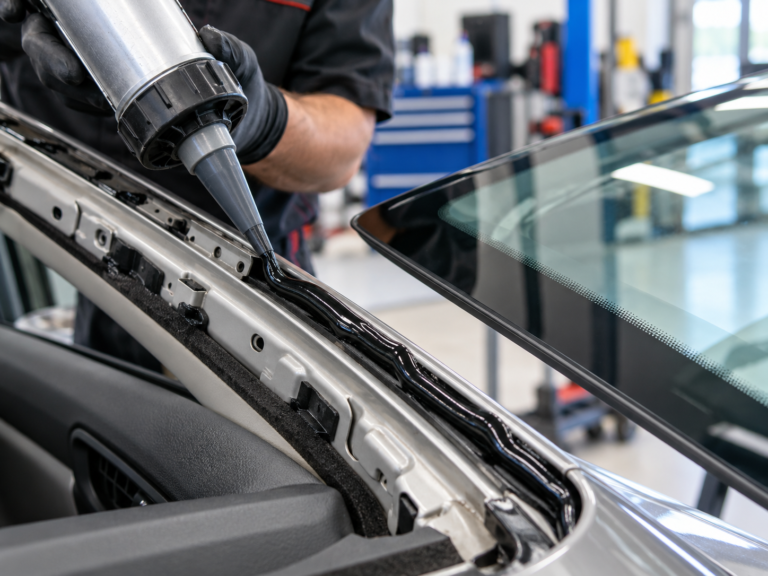
Replacing smart glass can be more complicated than replacing conventional automotive glass. Depending on the vehicle, electronically dimmable glass may contain specialized films, electrical connections, and control systems that must be considered during replacement.
Several factors are important:
-
Correct Replacement Glass: The replacement must match the vehicle’s original specifications, including its smart glass technology and electrical features.
-
Electrical Connections: Dimmable glass may require specific connectors and control components to function properly.
-
Limited Repair Options: Damage to electronic layers or specialized films may require replacement rather than conventional glass repair.
-
Manufacturer Procedures: Installation and system testing should follow the vehicle manufacturer’s requirements.
-
ADAS Calibration: If the replacement involves a windshield equipped with driver-assistance cameras, calibration may be required according to manufacturer procedures.
At 1st Shot Auto Glass, we can help identify the correct replacement windshield using your vehicle’s year, make, model, and, when necessary, its Vehicle Identification Number (VIN).
Not every advanced glass feature is available through aftermarket suppliers, so confirming compatibility before scheduling is especially important.
The Future of Smart Glass in Automotive Technology
As automotive technology continues to advance, smart glass could become more common in everyday vehicles, particularly in panoramic roofs, sunroofs, and specialty windows.
Future developments may include:
-
Improved Solar Heat Control: More efficient glass technologies could help reduce cabin temperatures and air-conditioning demand, especially in hot climates like Arizona.
-
Faster Tint Adjustment: Advancements in electronically controlled glass may allow quicker transitions between lighter and darker settings.
-
Greater Vehicle Integration: Smart glass controls could become more closely integrated with vehicle touchscreens, climate-control systems, and automatic comfort settings.
-
Expanded Availability: As manufacturing technology improves, electronically dimmable glass may become available in a wider range of vehicles.
While these advancements are promising, smart glass remains more common in specialty applications than in conventional windshields. Safety, visibility requirements, cost, and replacement availability will continue to influence how manufacturers adopt the technology.
For Arizona drivers, improved solar heat management could be one of the most practical benefits of future automotive smart glass developments.
Frequently Asked Questions About Automotive Smart Glass
Is smart glass the same as tinted glass?
No. Traditional tinted glass has a fixed level of darkness, while smart glass uses electronically controlled technology to change its tint, transparency, or light transmission.
Can damaged automotive smart glass be repaired?
It depends on the type and location of the damage. Minor surface damage may be repairable in some cases, but damage involving electronic films, coatings, or internal layers generally requires replacement. The manufacturer’s specifications determine the appropriate repair options.
Can smart glass be replaced with regular automotive glass?
Not necessarily. Vehicles equipped with electronically dimmable glass may require replacement glass with compatible electrical connections and control features. Using conventional glass could eliminate factory functions or create compatibility issues.
Does smart glass require ADAS calibration?
Smart glass itself doesn’t automatically require ADAS calibration. However, if a windshield replacement involves a vehicle equipped with driver-assistance cameras, calibration may be required according to the manufacturer’s procedures.